Why Apple Made Its First Foldable iPhone So Different From Other Foldable Phones

Apple waited years to enter the foldable market and then rejected several familiar design choices. The iPhone Duo reveals what the company wanted to fix first.
All featured products are selected by our editors and may include affiliate links. If you purchase through these links, we may earn a commission.
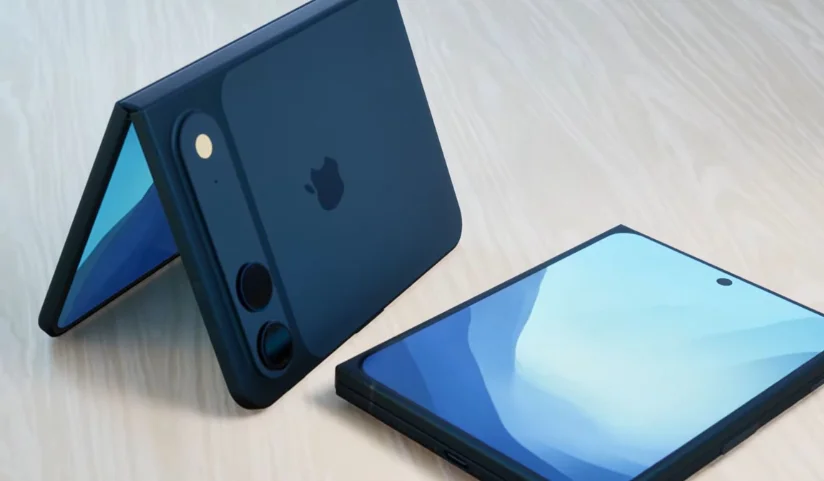
Apple arrived late to folding phones and made an unusual first move. Instead of copying the tall book style proportions already familiar from rival devices, the foldable iPhone opens into a wider 7.6-inch display shaped closer to a small tablet.
That decision shapes just about everything else in iPhone Duo, from app design to how content flows between its two screens. Understanding those decisions explains why Apple waited and which of the many foldable difficulties it now considers solvable.
Apple Wanted The Open Screen To Feel Useful From The Start
Many book-style foldables begin with a tall outer screen and unfold into a nearly square inner display. Apple CEO John Ternus said the company did not want the result to feel like two phone shapes joined together. Instead, Apple started by deciding what a useful large screen should look like.
That led to an unusual 1 to 1.4 inner display ratio. Apple already had years of experience designing software around larger iPad screens, so Duo was shaped around a wider canvas rather than simply stretching an existing iPhone layout.
The approach becomes clearer when the phone is closed. Its 5.4 inch outer display provides 90 percent of the screen area of an iPhone 18 Pro, according to Apple. Both screens also share the same aspect ratio, allowing content to scale proportionally as Duo opens.
Apple Spent Its Extra Time On The Problems People Already Knew
Years of iPhone rumors made Apple's absence from the category increasingly conspicuous. Samsung, Google, Huawei and several Chinese manufacturers had already demonstrated that a folding smartphone was technically possible.
Ternus offered a straightforward explanation after the launch. Apple was waiting until the idea met its standards for design, quality and durability. He also acknowledged that developing Duo required solving numerous problems involving the hinge and folding display.
That delay gave Apple something useful too. It could observe the weaknesses people had already discovered after living with earlier foldables, including visible creases, vulnerable inner screens, awkward proportions and software that sometimes treated a large folding display like an oversized phone.
Apple's response was therefore shaped by a mature category. It did not need to prove that screens could fold. It needed to give folding a convincing purpose inside iOS.
The Crease Became A Design Problem Apple Could Not Ignore
The crease running down a folding display has become one of the category's most recognisable compromises. Early hands-on testing of iPhone Duo found its crease difficult to see under normal conditions, although long-term use will provide a much better test than a controlled launch environment.
Apple also took an unusual approach to the surface itself. The flexible inner screen still requires a polymer top layer, but the company developed a nano texture treatment intended to reduce glare and create a flatter feeling surface.
Durability remains a legitimate concern. In a recent discussion on Reddit, one individual said the inner screen was the main source of hesitation, specifically mentioning scratches, delamination and how the crease might age over several years.
Another Reddit discussion highlighted early testing in which pressure from a fingernail did not visibly damage the inner screen. Encouraging demonstrations cannot yet tell people how the material will behave after thousands of folds and years of everyday use.
IOS Had To Learn What To Do When An iPhone Opens
Hardware only solves half of the folding problem. A large display becomes far less useful when applications simply stretch their existing phone interfaces across it. Apple reworked iOS 27 so interface elements can reposition as Duo opens, closes and changes orientation. The open Home Screen displays two pages, while controls and navigation elements can move to make better use of the wider canvas.
Application support will keep developing progressively. Older apps may first launch in a locked compatibility region, but apps updated for new iOS 27 versions can progressively access more of the inner display. With full Duo compatibility, developers will update their apps for the new look.
There are also deliberate constraints. You can have two apps running side-by-side, but the current Split View is an equal partition, not the flexibly resizable configuration you may be used to on iPad. Thus, Apple's first foldable iPhone gets multitasking without just becoming a little iPad.
The Folding Design Creates Features A Normal iPhone Cannot Copy
A folding screen needs practical uses beyond making a phone smaller in your pocket. Apple has concentrated several of those uses around photography and video calls. Duo can show a camera preview on its outer display while someone photographs you with the rear cameras. People can see their framing before the photograph is taken, while rear camera selfies can use the same external screen as a viewfinder.
The hinge also lets the foldable iPhone support itself at different angles. That can remove the need for a small tripod during a video call, time-lapse recording or other hands-free tasks. These features matter because they use the physical shape rather than merely taking advantage of extra screen area. A successful folding design needs reasons to stop halfway as well as reasons to open completely.
The Biggest Questions Cannot Be Answered At Launch
Apple has tackled some of the obvious problems with current foldables, but engineering promises can’t replace years of ownership. If you are looking at a first-generation Duo, try to get immediate assessment features out of questions that take time to answer.
A simple checklist makes that easier.
- Check how noticeable the crease becomes under bright light and from different angles.
- Watch for independent long-term hinge and inner screen testing.
- Check your essential apps for full Duo optimisation before relying on the larger display.
- Consider how often two applications would genuinely be useful side by side.
- Look at repair pricing and coverage before judging the real cost of ownership.
That final point becomes particularly important for someone who normally keeps a phone for four or five years. Foldable displays contain moving and flexible components that conventional iPhones simply do not have.
A High Price Makes The First Generation Decision Harder
The foldable phone category has always carried a premium, and Apple has followed that pattern. iPhone Duo starts at 1999 dollars, with preorders beginning October 16 and general availability scheduled for October 23.
That price means Duo needs to justify its folding mechanism through daily use. Someone mainly interested in cameras, battery life or familiar iPhone ergonomics has conventional alternatives within Apple's range without paying specifically for a folding display.
The more revealing question is how frequently the inner screen changes what someone can accomplish. If opening Duo becomes habitual for documents, video, photography or paired applications, its unusual proportions begin to make sense.
FAQs
Why Did Apple Wait So Long To Make A Folding iPhone?
Apple says it waited until the product met its standards for quality, durability and design. Executives have also described the category as an opportunity to rethink screen proportions, software and folding hardware rather than copy existing products.
Does the iPhone Duo Have A Visible Crease?
A crease is still present, although early hands-on reports describe it as difficult to notice in many viewing conditions. Long-term testing will be more meaningful because flexible displays can change as they accumulate use.
Can iPhone Duo Run Two Apps At The Same Time?
Yes. Two applications can appear side by side on the inner display. The current implementation divides the available area evenly and does not provide the same freely adjustable Split View found on iPad.
The late arrival of Apple makes iPhone Duo interesting for reasons beyond novelty. The business had years to see where folding phones frustrated customers, then made other dimensions, revamped iOS and treated the hinge as part of the experience rather than a mechanism to hide.
Follow TheWeeklyFind for more practical coverage of gadgets.
Recent Blogs
-
How to Use the Pebblebee Finder to Locate Your Lost Keys and Bags
Lost keys at home or left your bag somewhere? Discover how Clip 5 helps locate missing belongings and what to do when location updates stop.
-
Solar Lights That Make Your Garden Just as Inviting After Dark
Your garden deserves a little attention after sunset, too. Discover lighting ideas that make outdoor spaces feel inviting long after daylight fades.
-

Auguste Mini Dresses You Will Want To Wear On Repeat
Some dresses look good once and then disappear into the wardrobe. These four Auguste styles are easier to imagine wearing again and again.
-

Weekday Clothing Picks For Men Who Need Better Everyday Jeans
Some trousers earn a permanent spot in your weekly rotation. These five Weekday Jeans are selected with easy styling and repeat wear in mind.
-

How To Choose Better Seats On Emirates Without Paying Unnecessary Fees
Understand seat selection charges before paying extra. Find out when better choices become free and which exceptions help families.